Massage for Van and Lorry Drivers: Undoing a Twelve Hour Shift
29 August 2026 · 5 min read
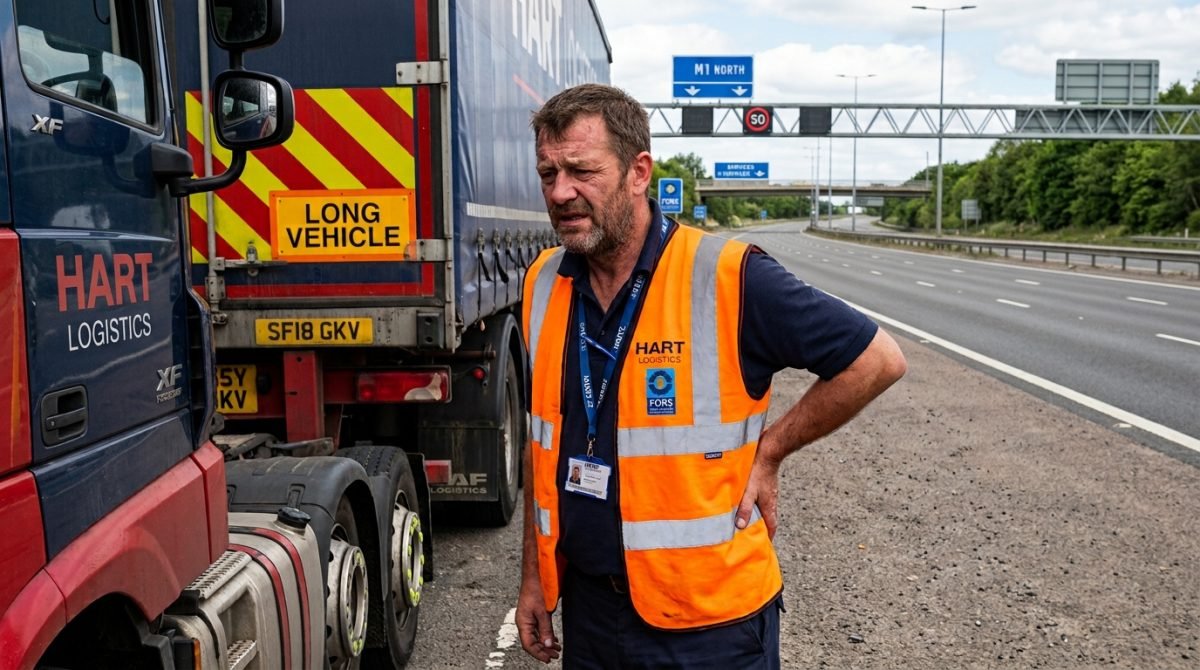
Nobody warns you that the hardest part of driving for a living is the sitting. You expect the early starts and the traffic. What catches people out is arriving home after a twelve hour shift barely able to straighten up, and doing it again the next day.
Here is what a long shift actually does to your body, what genuinely helps, and where a massage is and is not the answer.
Sitting is not resting
It feels passive, but holding a seated position is active work. Your lower back muscles and deep trunk muscles brace continuously to keep you upright against every corner, every brake, and every camber in the road. They do not get a break the way they would if you were standing and moving.
At the same time your hip flexors, at the front of the hips, sit shortened for hours. Muscles held short for long enough adapt to that length. When you finally stand up, they pull on the front of your pelvis and your lower back takes the strain. That is why the first few steps out of the cab are the worst.
Your glutes, meanwhile, do almost nothing for the entire shift. They are the muscles that should be supporting your lower back, and they switch off when you sit on them.
Vibration is the part people miss
Whole-body vibration is a recognised occupational factor for professional drivers, and it is cumulative. Hours of low-frequency vibration through the seat fatigues the muscles supporting your spine in a way that simply sitting on a chair does not.
It is also why you can feel wrung out after a long motorway run where nothing physically demanding happened. Your body has been working the whole time; you just were not aware of it.
Why it is rarely symmetrical
Driving loads one side more than the other. You brace your right leg on the pedals, you twist to check mirrors and blind spots, you reach for a gearstick or a handbrake with one hand, and you may rest one arm on the door or the wheel.
Over months that asymmetry shows up as one side of the lower back and one shoulder being consistently tighter than the other. Most drivers can tell you which side without being asked.
Heavy legs and swollen ankles
Blood returns from your legs mainly because your calf muscles squeeze it back up. Sitting still for hours removes that pump, so fluid pools in the lower legs and ankles. The result is that heavy, tight, faintly aching feeling by the end of a shift.
It is one of the most common things drivers mention, and it is also one of the most responsive to movement and to hands-on work.
What actually helps in the cab
Set the seat up properly. Backrest slightly reclined rather than upright, so the angle at your hip is a little more than ninety degrees. Seat high enough that your hips are not below your knees. Use the lumbar support if you have it, and a rolled towel behind the small of your back if you do not.
Move at every stop, not just the long ones. Two minutes of walking at a services or a delivery is worth more than one long stretch at the end of the day. Circulation restarts almost immediately.
Three things worth doing when you stop:
- A standing hip flexor stretch. One foot forward in a lunge, tuck your pelvis under, feel the front of the back hip. Thirty seconds each side. This is the single most useful one for drivers.
- Calf raises. Twenty of them, holding the cab door. This is the pump your legs have been missing.
- A gentle back extension. Hands on your lower back, lean back slowly. This reverses the flexed position you have held for hours.
Why drivers leave it too long
The honest reason is scheduling. You cannot take a day off to see to a stiff back, appointments are during working hours, and the pain is usually just about tolerable, right up until it is not.
The pattern we see most often is someone who has had a niggling lower back for eight months and finally books when it starts affecting their sleep. It is far easier to stay on top of than to dig out.
Where a massage fits in
Hands-on work does two things that are hard to achieve on your own. It restores circulation to muscles that have been under sustained static load, and it works into the lower back, hips and glutes, which are difficult to stretch effectively yourself.
For most drivers the useful combination is lower back and hips, plus the legs. Our foot and leg session is built for exactly the heavy-legged feeling described above, and a full hour lets us deal with the lower back properly as well.
To be straight with you: a massage is not medical treatment and we do not claim it cures anything. It is relief. For accumulated tension from long shifts, that is usually the thing that is actually needed.
When to get it checked instead
Some symptoms need a doctor rather than a massage. Speak to your GP if you have:
- Pain travelling down one leg past the knee, especially with pins and needles or numbness
- Weakness in a leg or foot, or catching your toe when you walk
- Back pain that wakes you at night or is there at rest
- Persistent swelling in one leg only, or a leg that is hot, red and painful
Seek urgent medical help if you develop numbness around the groin or inner thighs, or any loss of bladder or bowel control alongside back pain. That is rare, but it needs same-day assessment, not an appointment.
None of this is likely. It is simply not something a massage therapist should be working around. Our disclaimer sets out how we approach this.
Booking around a driving schedule
We are at 44 High St in the centre of Slough, which is convenient for the Trading Estate, the M4 corridor and the depots around town.
We are open until 8pm Monday to Friday and 10am to 6pm on Saturday, which is deliberately built around people who cannot take time out mid-shift. A 30 minute session is £40 and is enough for a focused lower back and leg reset. An hour is £60.
You can read what happens in a session if you have not had a massage before, or get in touch to book a slot.
One seasonal note: a cold cab and a cold start make all of the above worse from about November onwards. Here is why you seize up in autumn, and what helps.
Please note
Work Break is a massage studio. We are not doctors, physiotherapists or mental health professionals, and nothing in this article is medical, psychological or diagnostic advice. What you read here is general information, written from experience of treating people who work hard. It is not clinical guidance and it should not be used to diagnose or treat any condition.
Massage with us is for rest and relaxation. If you are in pain, feeling unwell, or struggling with your mental health, please speak to your GP or another qualified professional. If symptoms are severe, sudden, or getting worse, seek medical advice without delay.
Where we mention research or statistics, they are included for general context only and are not a recommendation of any treatment. You can also read our full Disclaimer and Terms and Conditions.
Search
Topics
Categories
Latest Posts
Recent Posts
Back had enough?
30 min £40 · 60 min £60. Open until 8pm weekdays, plus Saturdays and Sundays.
Book Your Work Break
44 High St, Slough. Weekday evenings until 8pm, plus Saturdays and Sunday evenings.